


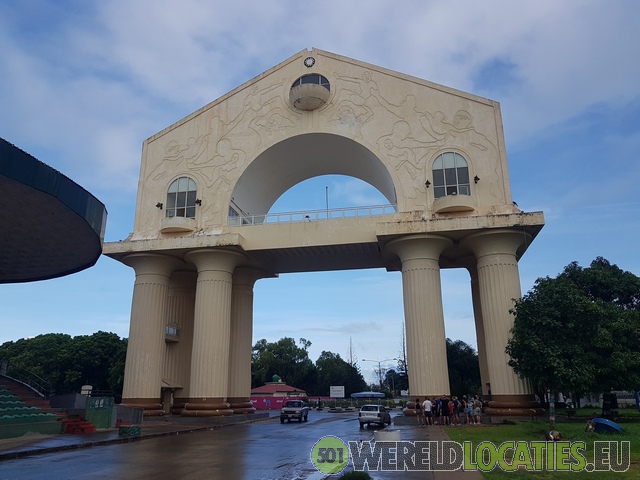
Foto: The Arch22 gateway (bron: Ronald van der Veer)
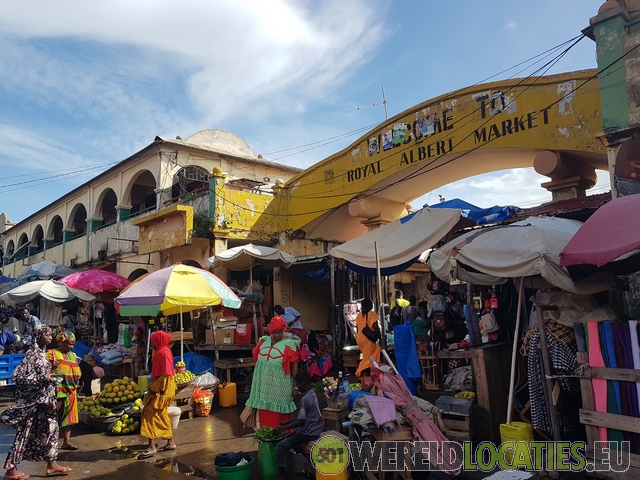
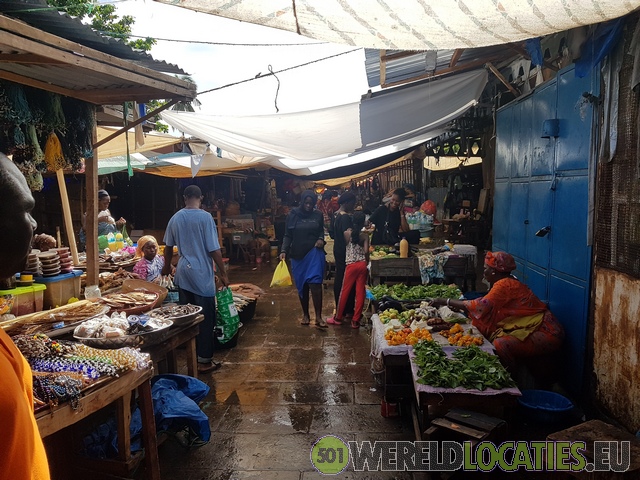
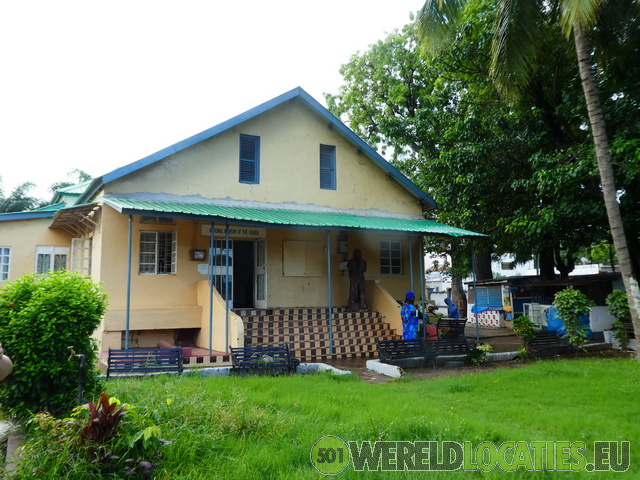
Gambia - Banjul is the capital of Gambia and lies on a peninsula on the south bank of the Gambia River. Together with the country's largest city, Serekunda, it forms the main economic region of Gambia. Trade is conducted everywhere along the roadside—in stalls, shops, or sometimes just on a mat on the ground. Traffic moves along in long streams. We enter Banjul via Arch 22. This commemorative arch was built in 1996 by order of dictator Yahya Jammeh. He came to power in 1994 through a coup d'état. I climb the Arch 22 via 160 steps. From the top floor, I have a nice view over the city and the harbor. I also see dark clouds hanging over the center. It doesn't take long before a new shower breaks loose. On the top floor of Arch 22, a small exhibition is set up about dictator Yahya Jammeh and victims of his regime. The good and bad aspects of his 22-year rule are displayed. Behind Arch 22 is a large covered grandstand where parades are held. A little further along Independence Drive lies the historic museum of Gambia. Three rooms display various collections, from slavery to African musical instruments. Worth a quick visit. Albert Market is where locals buy their food. Small streets with stalls form a maze. Many vendors want to know where I come from or if I want to buy something—from slippers, fruit to fish. The fish here was probably caught this morning. Tucked away among the market stalls lies the Banjul Craft Market, with wood carvings and other souvenirs.
Slave island Janjanbureh

Gambia - After breakfast, we drive by bus to Janjanbureh, formerly called Georgetown. This place on an island in the Gambia River played an important role in the slave trade. Slaves were gathered from the hinterlands at Janjanbureh. From here, they were transported ...
The Kiang West National Park
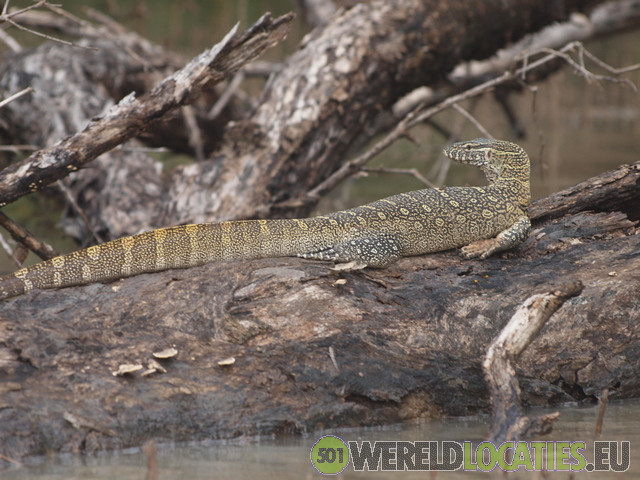
Gambia - At the wooden pier, two not very large boats are moored. We distribute ourselves over the boats. When we cross the Gambia River to the mangrove forests of Kiang West National Park on the other side, it turns out the boats are not completely watertight. ...
 The stone circles of Wassu

Gambia - The stone circles of Wassu are presumed to be ancient burial monuments. About two thousand years ago, the circles were erected. The pillars were dug from nearby rocks. Using wooden beams, the pillars were rolled to the location of the circles. At least, ...