


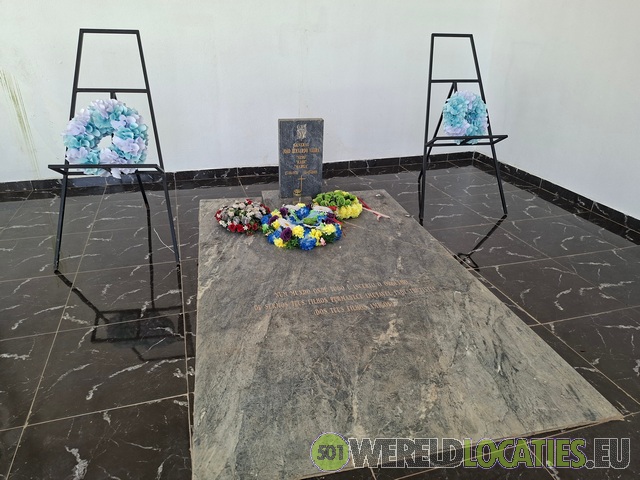
Foto: The mausoleum in the capital Bissau (bron: Ronald van der Veer)
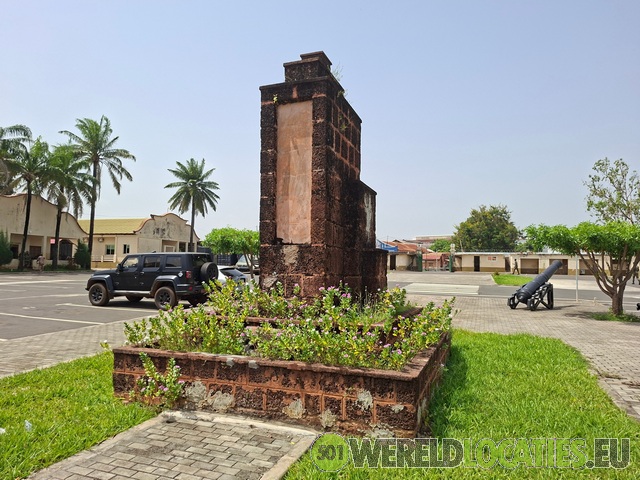
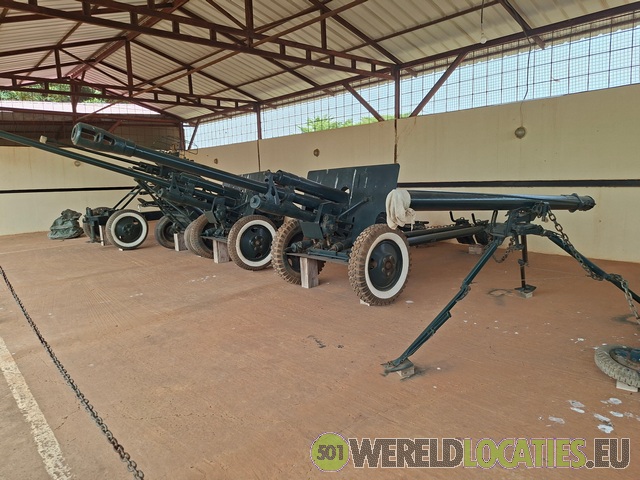
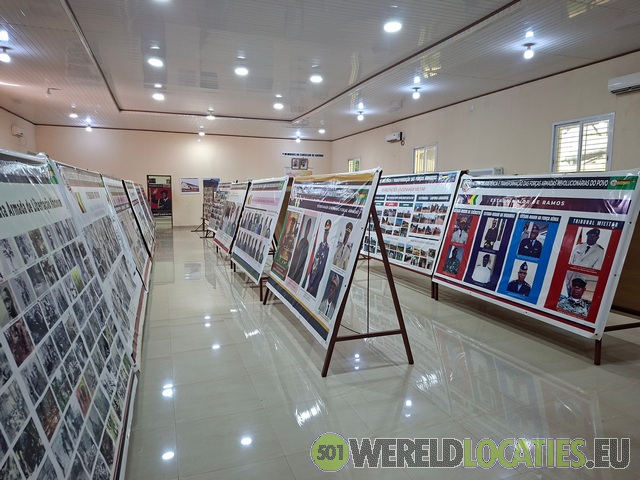
Guinea-Bissau - I have read that it is possible to visit the military fort in Bissau, although getting inside can be difficult. The Fortaleza de São José de Amura is still an active military base. I ask Helder about the possibilities. He is happy to accompany me to the fort. First, we drop off the other members of the group at the hotel. We then drive to the harbour, where the former Portuguese fort is located. The soldier at the entrance does not seem particularly keen to cooperate. I cannot understand a word of the Creole conversation between him and Helder, but his facial expression says it all. Helder makes a phone call to someone at the base. A little later, another soldier comes to collect us. We are allowed in. Paulino welcomes me. Together with his brother, who is also a soldier, he takes us to the mausoleum of Amílcar Cabral. All around me, I see soldiers walking across the grounds. Just to be on the safe side, I explicitly ask whether I am allowed to take a photograph at the mausoleum. Amílcar Cabral is a national hero in Guinea-Bissau. He led the struggle for the independence of Guinea-Bissau and Cape Verde. The struggle gained momentum after a dockworkers' strike was brutally suppressed in 1959, leaving dozens of people dead. Cabral was assassinated on 20 January 1973 in Conakry, the capital of Guinea. Later that year, the independence movement declared Guinea-Bissau independent. Portugal eventually recognised its independence on 10 September 1974. His body was transferred to this military base. Next to Cabral's grave is that of Nino Vieira, who was an important commander during the independence struggle. In 1980, he staged a coup and seized power. He remained a dominant political figure until 1999, when he was overthrown during the civil war and forced to leave the country. In the adjoining room lie another six important leaders. Their names and roles are all explained to me, but I can barely keep track of who is who. Opposite the mausoleum is the museum. I take a look at the artillery. Apparently, Cabral's body was transported from Conakry to Bissau in an amphibious vehicle. An old Volkswagen Beetle is parked next to it. This is said to have been the vehicle of the resistance hero, or at least that is what I think I understand. I am even allowed to sit behind the steering wheel of this historic car. Inside the museum, the history of the independence struggle is explained through a large collection of photographs. What I mainly see are men proudly posing for the camera because they are important, or think they are. Most of the weapons displayed on the walls are Russian. Support for Guinea-Bissau came from several countries, including Guinea, Russia, China and Cuba. I conclude the tour and warmly thank the soldiers. It was a special experience to learn something about the country's history in this way. Perhaps it was all the more special because getting inside had not been particularly easy.
Saltwater hippos
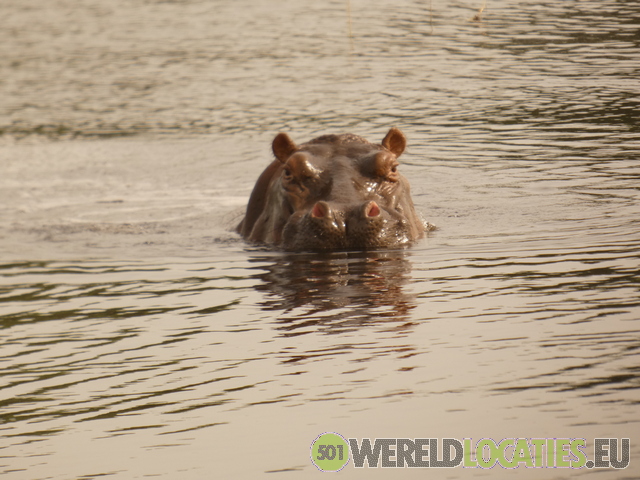
Guinea-Bissau - This morning, we set off by boat towards the westernmost tip of Orango National Park, on the island of Orango, after which the park is named. I push my sunglasses firmly onto my head and put away my other loose belongings. The skipper steers the boat ...