
 Montenegro - Durmitor National Park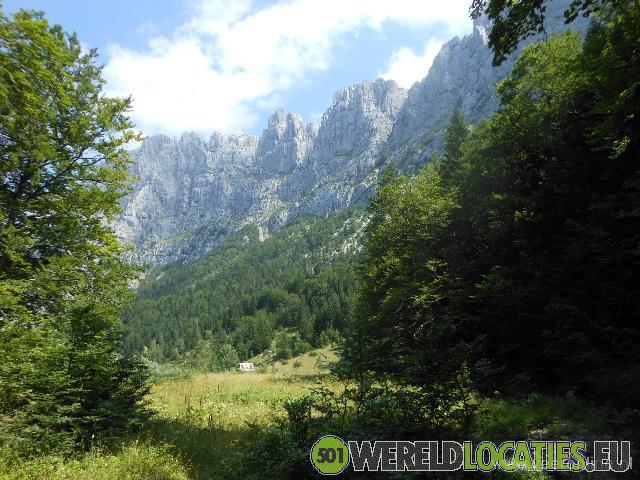


Foto: View of the Old City of Algiers (bron: Ronald van der Veer)
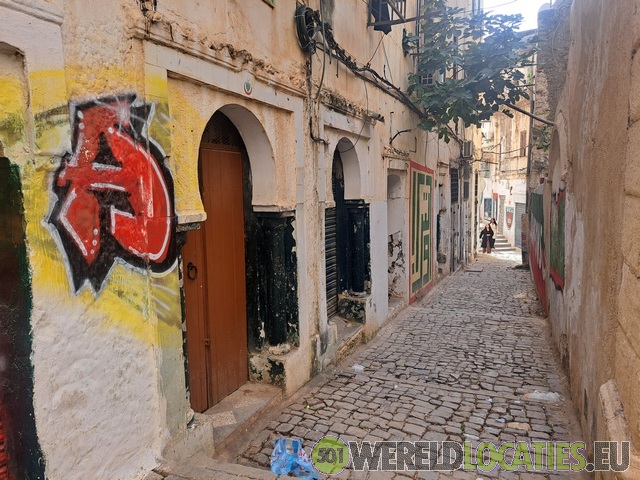
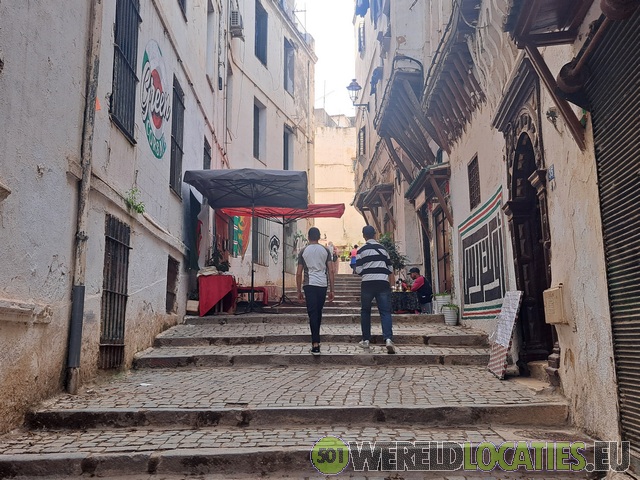
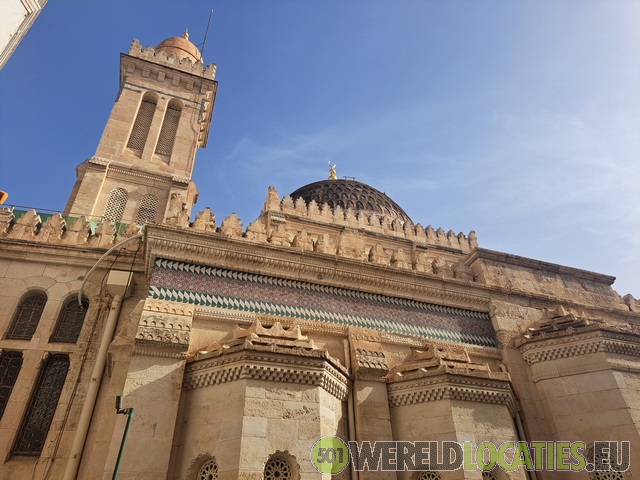
Algeria - In the seventeenth century, the Spaniards attacked Algiers. The Algerians called for help from the Ottomans. This led to present-day Algeria becoming part of the vast Ottoman Empire, although the country retained a special status. The Beys became the rulers of the regions in Algeria. Earlier, in Constantine, we had visited the palace of Ahmed Bey. The Ottomans built a fort above the city of Algiers. Within its walls were the Bey’s palace, a mosque, guest quarters, and a gunpowder store. During the French invasion, the fort fell into French hands. We explore some of the rooms, the mosque, and the gunpowder storage. The palaces are still undergoing extensive restoration. Outside the fort begins the kasbah, a network of narrow streets clinging to the hillside. Because we start at the top, we mostly descend through the kasbah. Riyad leads us. The streets are busy. It is Saturday, a day off for many Algerians. Women are especially shopping at the stalls and shops. What a contrast to yesterday. Here, it is also much less of a problem if people appear in photographs. From a café rooftop terrace, we have a view over the kasbah, the boulevard, and the harbor. Riyad points out the various mosques, Martyrs’ Square, and the European quarter. From above, the houses of the kasbah look messy and chaotic. As we continue walking, the lively street atmosphere stands out. People regularly greet us or ask where we are from. In a restaurant, we order some food. Being so close to the sea, fish is naturally a specialty. I order shrimp in sauce. Next to the restaurant is the palace of Mustapha Pasha, one of the best-preserved Ottoman-Algerian palaces from the 18th century. It was built around 1798 by Mustapha Pasha, a powerful Ottoman governor. The courtyard is especially beautiful. The palace now houses the Museum of Manuscripts, which interests me less. At the bottom of the old district, we reach Martyrs’ Square. In the 19th century, Algerians tried to protect a mosque that the French wanted to demolish. The protesters were killed, and the mosque was torn down. The cathedral and theater that replaced it now serve as a mosque. We stroll along the boulevard as the sun begins to set.
Roman Ruins of Djemila

Algeria - The ancient Roman city of Djémila, originally named Cuicul, was founded in the first century AD. It was initially populated by former soldiers from the Third Legion of Augustus and grew into an important regional economic hub. The city's prosperity was ...
Tassili NAjjer National Park
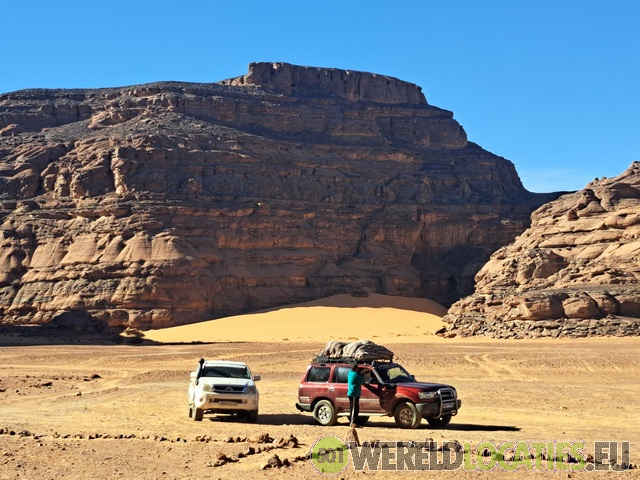
Algeria - At ten o’clock, we meet the crew for the coming days: a guide, a cook, and two drivers. The luggage goes into one vehicle, while the supplies are loaded in the back of a pickup truck. We divide ourselves between the two cars and drive out of Djamet. ...
The Cities in the MZab Valley

Algeria - Ghardaïa is a Berber oasis town and forms the heart of the M’Zab Valley. The fortified sister towns of Melika, Beni Isguen, Bounoura, and El Atteuf are also located here. We first visit the oldest of the five towns: El Atteuf, founded in 1012. Over ...
The Hanging Bridges of Constantine

Algeria - I had expected that today we would walk to the old center of Constantine, but the distance turns out to be too far. Instead, we drive by minibus to the Emir Abdelkader Mosque. After independence, this mosque was built in 1972 to accommodate about 20,000 ...
The Roman City of Tipaza
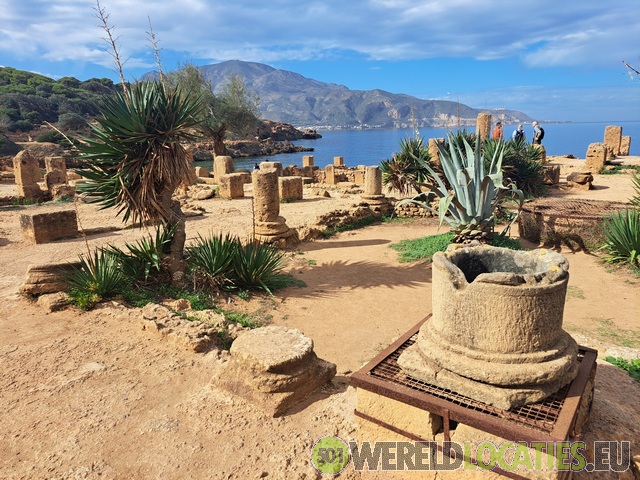
Algeria - A little later, Leila comes walking toward us. She guides us to the two Roman cities. Leila explains that we will first drive to Cherchell, the farthest city from Algiers. During the French colonization, many historic Roman buildings were demolished and ...
Timgad the Pompeii of Africa

Algeria - Just after midday, we arrive in Timgad. Timgad is a large Roman archaeological site and the best-preserved Roman city in this region. Because part of the remains ended up buried under a thick layer of desert sand, the city is often referred to as the ...