

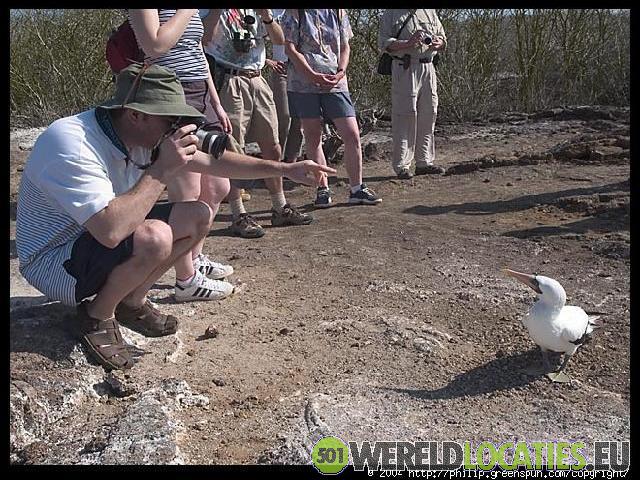
Foto: Two blue-footed boobies on the Galápagos Islands (bron: Philip Greenspun)
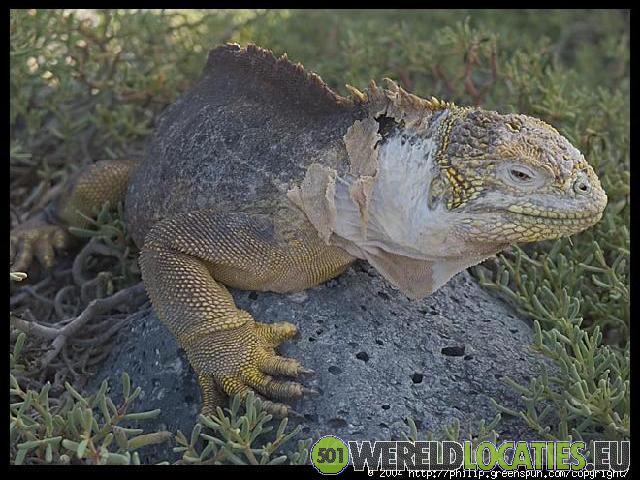
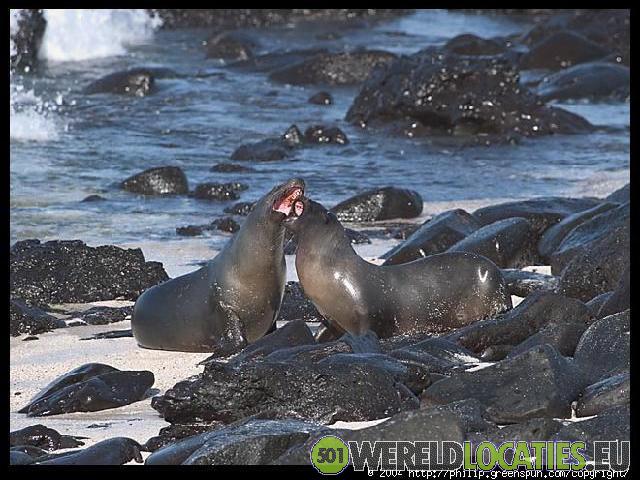
Ecuador - The Galápagos Islands (commonly called Galapagos, Spanish: Islas Galápagos, officially Archipiélago de Colón) are a scattered group of islands located on the equator in the Pacific Ocean. Politically, they belong to Ecuador, but they lie in open sea about 1,000 km off the west coast of South America. Geologically, the islands are very young—just a few million years old—and of volcanic origin. They are home to many unique animals and plants, often forming slightly different species on each island. The Galápagos Islands were accidentally discovered in 1535 by Dominican Bishop Tomás de Berlanga from Panama after his ship drifted into a calm area. The islands were uninhabited, although Thor Heyerdahl reported pottery findings in the 1950s that supposedly originated from South America, a claim that remains controversial. Ecuador annexed the Galápagos Islands on February 12, 1832. Since 1959, the islands have been a national park. The surrounding ocean has also been declared a marine reserve. The islands were added to the UNESCO World Heritage list in 1978, and in 1981 the designation was extended to include the marine reserve. In 1959, the Charles Darwin Foundation was established to help preserve the islands’ natural state.
The Jesuit Church of Quito

Ecuador - Quito, the capital of Ecuador, was founded in the 16th century on the ruins of an ancient Inca city. The city lies at an altitude of 2,850 meters. Despite the severe earthquake in 1917, the city has been well preserved, especially the historic center. ...