

 Denmark - Nyhavn in Copenhagen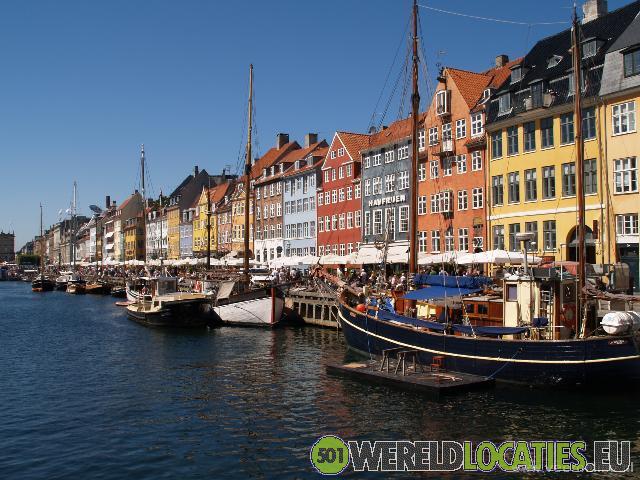

Foto: The Pyramid of the Magician (bron: Ronald van der Veer)
Mexico - The Temple of Uxmal, also known as the Pyramid of the Magician (Pirámide del Adivino), is the striking centerpiece of the Uxmal archaeological site, located in the northwest of Mexico’s Yucatán Peninsula. This pre-Columbian Maya city is one of the most important and best-preserved Maya sites in Mexico and is listed as a UNESCO World Heritage Site. What sets Uxmal apart from other Maya sites is its refined architecture, elegant style, and the rich symbolism of its buildings. The Pyramid of the Magician rises majestically above the surrounding complex and reaches a height of about 35 meters. Unlike most Mesoamerican pyramids, which have a square base and steep staircases, this pyramid has an oval, almost elliptical shape – unique of its kind. The structure consists of five different building phases, each constructed during a different period between the 6th and 10th centuries AD. According to a local Maya legend, the pyramid was not built over years, but in a single night by a magical dwarf – hence the name “Pyramid of the Magician.” The temple atop the pyramid, accessible only via a steep staircase on the west side, is adorned with richly detailed mosaics of the rain god Chaac, a central figure in the culture of Uxmal. The emphasis on Chaac highlights the importance of rain in this region, where natural water sources like cenotes are rare. The Maya of Uxmal depended heavily on rainfall for agriculture and survival, and the worship of Chaac was carried out with great devotion. In addition to the pyramid, Uxmal features many other impressive structures, such as the Governor’s Palace, the Nunnery Quadrangle (Cuadrángulo de las Monjas), and the House of the Pigeons (Casa de las Palomas). The refinement of the stonework, the perfectly balanced proportions, and the geometric patterns all testify to the high technical and artistic skill of the Maya builders. The Puuc style, characteristic of Uxmal, combines simple, smooth lower walls with richly decorative friezes at the top – often filled with masks of Chaac, serpents, latticework, and other symbols. Today, Uxmal attracts travelers from all over the world who come not only for the impressive ruins but also for the mysterious atmosphere that surrounds the temple. As you climb the stairs and gaze out over the surrounding jungle, it’s easy to imagine how this place once thrived as a center of religion, politics, and science. The Temple of Uxmal is more than just an ancient structure – it’s a gateway to the past of a highly developed civilization, wrapped in myth, magic, and beauty.


Calle 59 of Campeche

Mexico - The town of Campeche, located on the west coast of Mexico’s Yucatán Peninsula, is a charming and historic port city known for its well-preserved colonial architecture and rich history. As the capital of the state of Campeche, the city radiates a unique ...
Cancun on the Yucatan Peninsula

Mexico - A small Mexican town that was virtually unknown over fifty years ago has grown into a modern coastal city in recent decades. Cancún, in Mexico, is now the most popular destination for younger travelers. Its nightlife and entertainment are fantastic. ...
Lake Bacalar

Mexico - Lake Bacalar, also known as the Lake of Seven Colors, is a stunning natural gem located in the state of Quintana Roo, in the south of Mexico’s Yucatán Peninsula. This lake, covering approximately 42 square kilometers, is famous for its remarkable variety ...
San Cristobal de las Casas

Mexico - San Cristóbal de las Casas is an atmospheric town located in the highlands of the Mexican state of Chiapas. Sitting at an altitude of about 2,200 meters, the town is surrounded by green mountains and enjoys a pleasant climate that attracts visitors year-round. ...
The Agua Azul Waterfall

Mexico - The Agua Azul waterfall, which literally means "blue water," is one of the most breathtaking natural sights in the Mexican state of Chiapas. Located in a tropical rainforest about 70 kilometers from the city of Palenque, this waterfall is not a single ...
The Cenote Azul

Mexico - 1141 Cenote Azul, which literally means "Blue Cenote," is one of the most beautiful and popular cenotes on Mexico’s Yucatán Peninsula. Located near the town of Bacalar, not far from the border with Belize, this cenote is a natural freshwater pool that ...
The flamingos of Celestun

Mexico - The flamingos of Celestún, a coastal village in the Mexican state of Yucatán, are among the most iconic and enchanting natural spectacles on the peninsula. Located in the Ría Celestún Biosphere Reserve, about an hour and a half from the city of Mérida, ...
The paradise island of Isla Mujeres

Mexico - Isla Mujeres, literally “Island of the Women,” is a small, paradisiacal island off the coast of Cancún in the Mexican Caribbean Sea. Just seven kilometers long and about 650 meters wide, this island offers a peaceful alternative to the bustling mainland ...
The Pyramid of Kukulcán

Mexico - El Castillo, or the Pyramid of Kukulcán, is a step pyramid located in Chichén Itzá in the state of Yucatán on the Yucatán Peninsula in Mexico. This pyramid is one of the most famous structures in Mexico and was built by the Maya in the 9th century. ...
The ruined city of Palenque

Mexico - Palenque is an archaeological site of the Maya civilization located near the Usumacinta River in the municipality of Palenque. In terms of size, the site is moderate compared to major sites like Tikal or Copán, but its findings are of great value. Some ...
The ruins of Tulum

Mexico - The Temple of Tulum, also known as the Temple of the Wind (Templo del Viento), is one of the most striking and atmospheric ruins of the ancient Maya city of Tulum, located on the eastern coast of Mexico’s Yucatán Peninsula. This archaeological site ...