



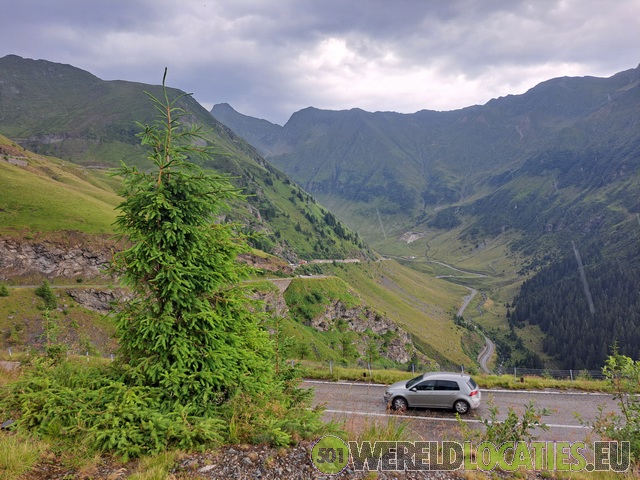
Foto: The hairpin bends of the Transfgran highway (bron: Ronald van der Veer)
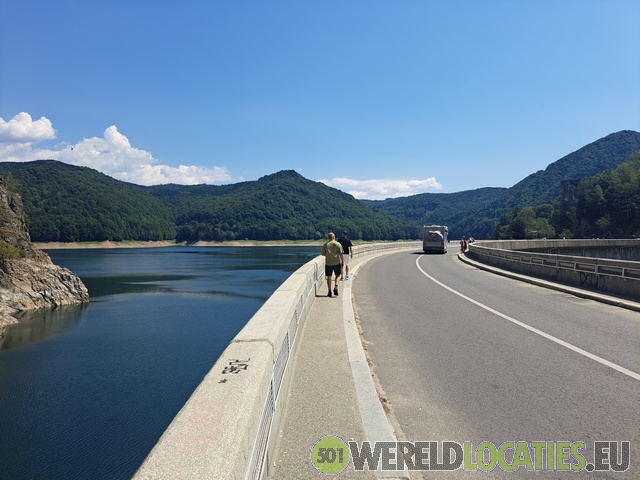
Romania - The Transfagarasan Highway, also known as DN7C, is one of the most scenic and dramatic roads in Europe. Winding through the rugged Fagaras Mountains in central Romania, it stretches over 90 kilometers and connects the regions of Transylvania and Wallachia. Built during the communist era between 1970 and 1974 under the rule of Nicolae Ceausescu, the road was originally intended for strategic military access in case of a Soviet invasion. Construction of the highway was extremely difficult due to the harsh mountainous terrain, dense forests, and unpredictable weather. It required the efforts of thousands of soldiers and engineers, and sadly, dozens of lives were lost during its construction. The result, however, is an engineering marvel that ascends to an altitude of 2042 meters at its highest point near Balea Lake, making it the second-highest paved road in Romania. The Transfagarasan is famous for its sharp hairpin turns, steep descents, tunnels, and breathtaking panoramic views. Along the way, drivers and cyclists pass through dense forests, alpine meadows, waterfalls, and rocky peaks. Notable landmarks along the route include the Vidraru Dam – one of Romania’s largest hydroelectric dams – and the Balea Tunnel, which is the longest road tunnel in the country at 884 meters. During the summer months, the highway attracts thousands of tourists, drivers, motorcyclists, and cyclists who seek the thrill of the road and the beauty of the Carpathians. The route is only open from late June to October due to heavy snowfall and avalanche risk in the colder seasons. The road gained international fame in 2009 when it was featured on the British TV show Top Gear. Host Jeremy Clarkson famously called it "the best road in the world" – a statement that continues to attract driving enthusiasts from across the globe. More than just a road, the Transfagarasan is a journey through some of Romania’s most impressive landscapes. Whether for adventure, photography, or pure driving pleasure, it offers an unforgettable experience in the heart of the Romanian mountains.
ClujNapoca the Cultural Heart of Transylvania

Romania - Cluj-Napoca, often simply referred to as Cluj, is one of Romania’s most important cities and is considered the cultural and economic capital of Transylvania. Located in the northwest of the country and surrounded by the hills of the Apuseni Mountains, ...
Draculas Castle

Romania - After more than two hours of driving, we reach the exit to Bran. Via fifteen sharp hairpin turns, we descend to the lower landscape. Then, a straight road leads to the castle. As we enter the village, we already see the castle on the hillside. Clearly, ...
Old town of Bucharest

Romania - From the hotel, we walk into the city. We’re looking for the Darvari Hermitage Church. This is the first stop on a walking tour from the guidebook. A service is underway in the church. Notably, only women are present. We quietly observe from the back. ...
Sighisoara the Medieval Pearl of Transylvania

Romania - Sighișoara is one of the best-preserved medieval towns in Europe and is located in the heart of Transylvania, Romania. The town was founded in the 12th century by Saxon settlers, also known as Transylvanian Saxons, who were invited by the Hungarian king ...
The Alba Carolina Star-Shaped Citadel

Romania - Alba Carolina is an impressive star-shaped citadel located in the city of Alba Iulia. Built between 1715 and 1738 by order of the Habsburg monarchy, it is one of the largest and best-preserved fortresses in Southeastern Europe. The citadel was designed ...
 The colossal Palace of the Parliament

Romania - On the opposite side of the Dâmbovița River stands the Parliament building. It is the second-largest building in the world—only the Pentagon in the United States is larger. Dictator Nicolae Ceaușescu ordered the construction of this massive structure ...
The History of Salina Turda
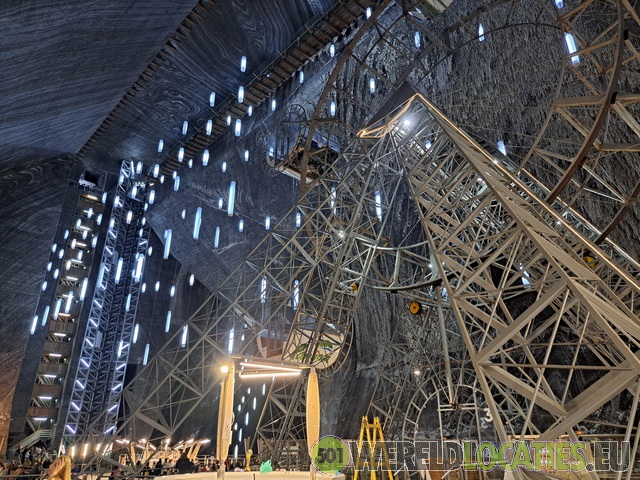
Romania - The history of Salina Turda dates back to Roman times, when the area around Turda was already known for its salt mining. The first written mention of the mine comes from 1271. During the Middle Ages and the Hungarian-Romanian period, the mine produced ...
The monasteries of Bukovina

Romania - In the region of Bukovina, where we’re staying, monks had a stronghold in the 16th century. Due to frequent Ottoman attacks, they built fortified monasteries in the mountains. These also provided shelter to villagers during attacks. The monasteries ...
The Royal Castle of Pele

Romania - Peleș Castle, located in the picturesque town of Sinaia in Romania’s Southern Carpathians, is one of the most beautiful castles in Europe. Built between 1873 and 1914 on the orders of King Carol I of Romania, it served as the royal family’s summer ...