

 Transnistria - Tiraspol Little Russia


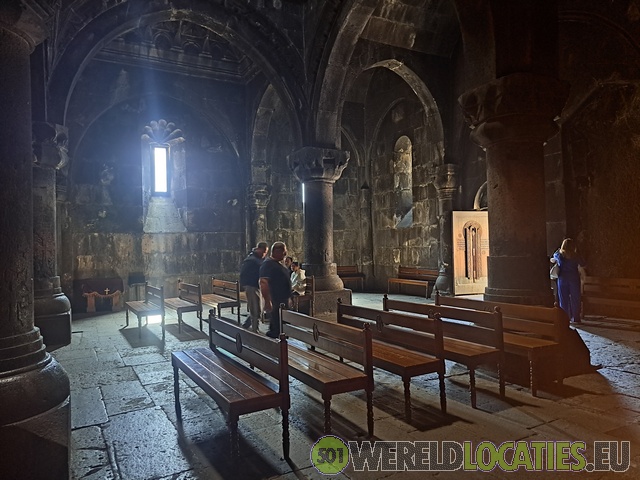
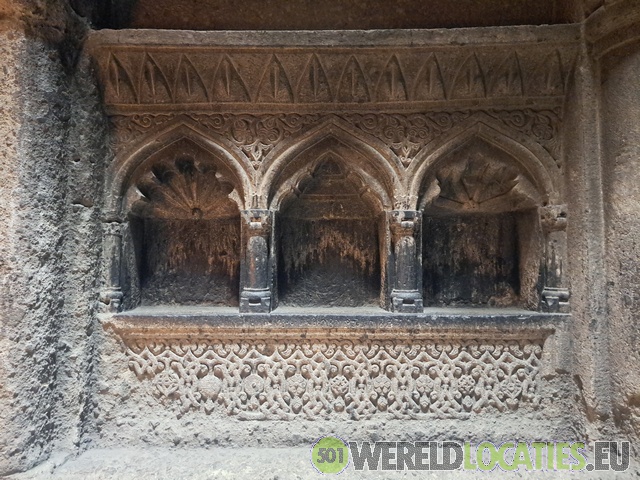
Foto: The Geghard Monastery (bron: Ronald van der Veer)
Armenia - The Geghard Monastery, also known as Geghardavank, is one of Armenia’s most impressive religious monuments and is listed as a UNESCO World Heritage Site. The monastery lies deep in the picturesque Azat Valley, surrounded by steep cliffs and rugged mountains. The name “Geghard” means “spear,” referring to the holy lance that, according to legend, pierced Jesus on the cross. This relic was kept here for centuries, making the monastery an important pilgrimage site. The complex was founded in the 4th century by Gregory the Illuminator, shortly after Armenia’s conversion to Christianity. The current buildings date mainly from the 12th and 13th centuries, when the monastery was under the protection of the noble Proshian family. What makes Geghard unique is that much of it is literally carved out of rock. The churches, chapels, and cells are partially hewn into the mountainside, giving the impression that the monastery forms one with nature. The main church, Katoghike, was built in 1215 and features an impressive dome resting on carved columns. Behind it are the rock-hewn churches Avazan and the Proshian Hall, entirely carved into the cliff. The dark, cool spaces are illuminated only by narrow openings in the ceiling, allowing mystical sunlight to enter. The walls and ceilings are covered with crosses, patterns, and inscriptions. The acoustics are exceptional; Gregorian chants sound almost supernatural. The courtyard contains numerous chachkars, finely carved Armenian cross-stones, illustrating medieval religious art. According to tradition, the monastery once housed relics and valuable manuscripts and was a center for religious study and music. The route to Geghard passes through a narrow gorge along the Azat River, with views of steep cliffs and small rock chapels. Near the entrance, local women sell sweets, lavash bread, and dried fruit—a lively contrast to the serene silence within the monastery walls. Geghard is not only a masterpiece of medieval architecture but also a spiritual place where nature, faith, and history harmoniously converge. Its mystique has endured for more than fifteen centuries.
By cable car to the Tatev Monastery

Armenia - The Tatev Monastery is spectacularly situated on a rocky plateau above the deep gorge of the Vorotan River in southern Armenia. This medieval monastery complex, dating from the 9th century, was for centuries an important religious, cultural, and scientific ...
Holy Etchmiadzin of the Armenian Church

Armenia - The Mother Cathedral of Holy Etchmiadzin is a 4th-century Armenian church in the city of Ejmiatsin, Armenia. It is also the central cathedral of the Mother See of Holy Etchmiadzin of the Armenian Apostolic Church. The Etchmiadzin Cathedral is listed as ...
The Amenaprkich Church in Gyumri

Armenia - Gyumri, Armenia’s second-largest city, is known as the cultural heart of the country and is full of religious and architectural treasures. Despite the devastating earthquake of 1988, Gyumri has retained much of its historical charm. The city has several ...
The Cascade of Yerevan

Armenia - Yerevan, the capital of Armenia, is one of the oldest continuously inhabited cities in the world. Founded in 782 BCE, the city combines a rich history with a modern, vibrant atmosphere. Located at the foot of the mighty Mount Ararat, Yerevan offers a ...
The Sanahin and Haghpat Monasteries

Armenia - The Sanahin and Haghpat monasteries are located in northern Armenia, in the Lori region, forming one of the most impressive religious and architectural complexes in the country. Both are UNESCO World Heritage Sites dating from the 10th and 11th centuries, ...
The Sevanavank Monastery

Armenia - The Sevanavank Monastery, also called Sevan Monastery, is situated on a picturesque peninsula on Lake Sevan, Armenia’s largest lake and one of the highest lakes in the world. At over 1,900 meters above sea level, it offers breathtaking views of the ...